

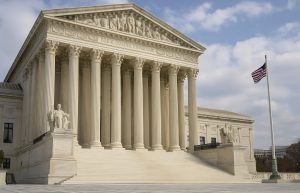
 In 2025, several landmark U.S. Supreme Court decisions have reshaped how employee rights and employer responsibilities are defined under federal and state employment law. These rulings carry serious implications for workers across the United States — particularly in areas such as workplace discrimination, wrongful termination, reasonable accommodations, and religious freedom in the workplace.
At Allred, Maroko & Goldberg, we believe that staying informed about these changes is essential for every worker. Our attorneys have long represented employees in high-profile civil rights and employment discrimination cases, helping to enforce fairness and accountability at every level of the legal system.
The U.S. Supreme Court’s Expanding View of Workplace Discrimination
In early 2025, the U.S. Supreme Court ruled on multiple cases interpreting Title VII of the Civil Rights Act, signaling a renewed focus on protecting workers from discriminatory intent and biased employment decisions. One of the most talked-about cases reaffirmed that gender identity and sexual orientation remain protected classes under federal law, ensuring that LGBTQ+ employees cannot be treated unfairly or subjected to hostile work environments.
Another major case clarified that reverse discrimination claims — where majority-group employees allege bias — must be backed by direct evidence of discriminatory motive, not just speculation. This ruling reinforces that Title VII protections are designed to address illegal discrimination against any protected class, but they do not override legitimate business decisions supported by documented performance or conduct issues.
Disability Discrimination and Reasonable Accommodations
The Americans with Disabilities Act (ADA) also saw an important update through a recent Supreme Court’s decision involving reasonable accommodations. The Court ruled that employers are required to engage in a genuine, interactive process with workers requesting accommodations — and that denying a request without exploring alternative solutions can constitute disability discrimination.
For example, if an employee needs a modified schedule or remote work arrangement to perform their essential job functions, employers must provide reasonable accommodations unless they can prove undue hardship. This ruling underscores the importance of clear communication, written documentation, and good-faith efforts to ensure equal access and opportunity for employees with disabilities.
Religious Accommodations: Balancing Faith and Fairness
A separate case involving religious practices further strengthened employee protections under federal law. The Court held that employers must do more than merely tolerate religious observances — they must make meaningful efforts to provide reasonable accommodations when requests are made in good faith.
This decision builds upon the Court’s earlier interpretations of Title VII, expanding the definition of what qualifies as an undue burden. Employers must now demonstrate a significant disruption or substantial cost before denying a religious accommodation, such as flexible scheduling for worship or adjustments in dress codes for religious attire.
Wrongful Termination and Retaliation Claims
Another significant 2025 ruling reshaped how courts handle wrongful termination and retaliation cases. The Supreme Court’s decision emphasized that employees who report sexual harassment, unsafe conditions, or civil rights violations are entitled to robust protections from retaliation — even if the original complaint does not lead to disciplinary action against the alleged offender.
In one federal case, a former employee claimed they were dismissed after filing a discrimination complaint related to race and national origin. The Court found that firing an employee shortly after such a complaint constitutes retaliatory intent, even without explicit evidence of bias. This outcome reinforces the importance of maintaining detailed records, documenting communications, and consulting experienced legal counsel before taking or responding to any workplace complaint.
What Employers Must Learn from These Decisions
Employers should take note: the 2025 decisions underscore that compliance with federal laws like the Civil Rights Act, ADA, and Age Discrimination in Employment Act requires proactive steps — not just written policies.
Companies must:
- Conduct regular workplace discrimination and harassment prevention training.
- Review and update employee handbooks to reflect evolving federal court and state law interpretations.
- Document legitimate business reasons behind employment decisions to protect against false claims.
- Provide reasonable accommodations and maintain open communication when employees raise concerns.
Failing to meet these standards exposes employers to litigation risks, nationwide injunctions, and significant reputational damage.
What Workers Should Take Away from 2025’s Legal Landscape
For employees, these landmark cases represent both opportunity and protection. Workers now have stronger tools to fight workplace discrimination, wrongful termination, and retaliation, supported by clearer federal precedent.
If you believe you’ve faced discrimination based on race, gender, sexual orientation, religion, disability, or age, it’s critical to understand your rights under federal and California law. The right legal representation can make the difference between dismissal and justice.
Protect Your Rights with Trusted Legal Counsel
The 2025 rulings prove one thing: the legal landscape is constantly evolving — and workers need advocates who can navigate its complexities with experience and precision. Allred, Maroko & Goldberg remains at the forefront of employee rights litigation, representing clients in high-profile discrimination and harassment cases across California and beyond. If you’ve been wrongfully terminated, denied accommodations, or discriminated against, don’t wait.
Call Allred, Maroko & Goldberg Law at 323-746-1853 today for a free consultation and learn how we can help you secure justice.